For the last 12 years or so, I’ve had the privilege of leading some of the most brilliant minds. They’re well educated—most have more degrees than a thermometer. They’re hard workers. Go-getters. People you want on your team.
People always ask me, “Micah, how did you get there?”
My answer’s always the same: If I had planned it, I wouldn’t be here.
What does that mean?
Well, I’ve served three U.S. Presidents and managed some of the most iconic real estate in this country. Did I plan that? Hell no. Could I have designed it? I’m not that smart.
So how did it happen?
I take a long time to decide when it’s time to move. I choose my next step carefully—and that discipline has served me well.
But here’s what I’ve noticed:
Balancing profit and people? It’s hard. It’s painful. It’s long. And sometimes you have to make decisions for the business that—frankly—you hate making.
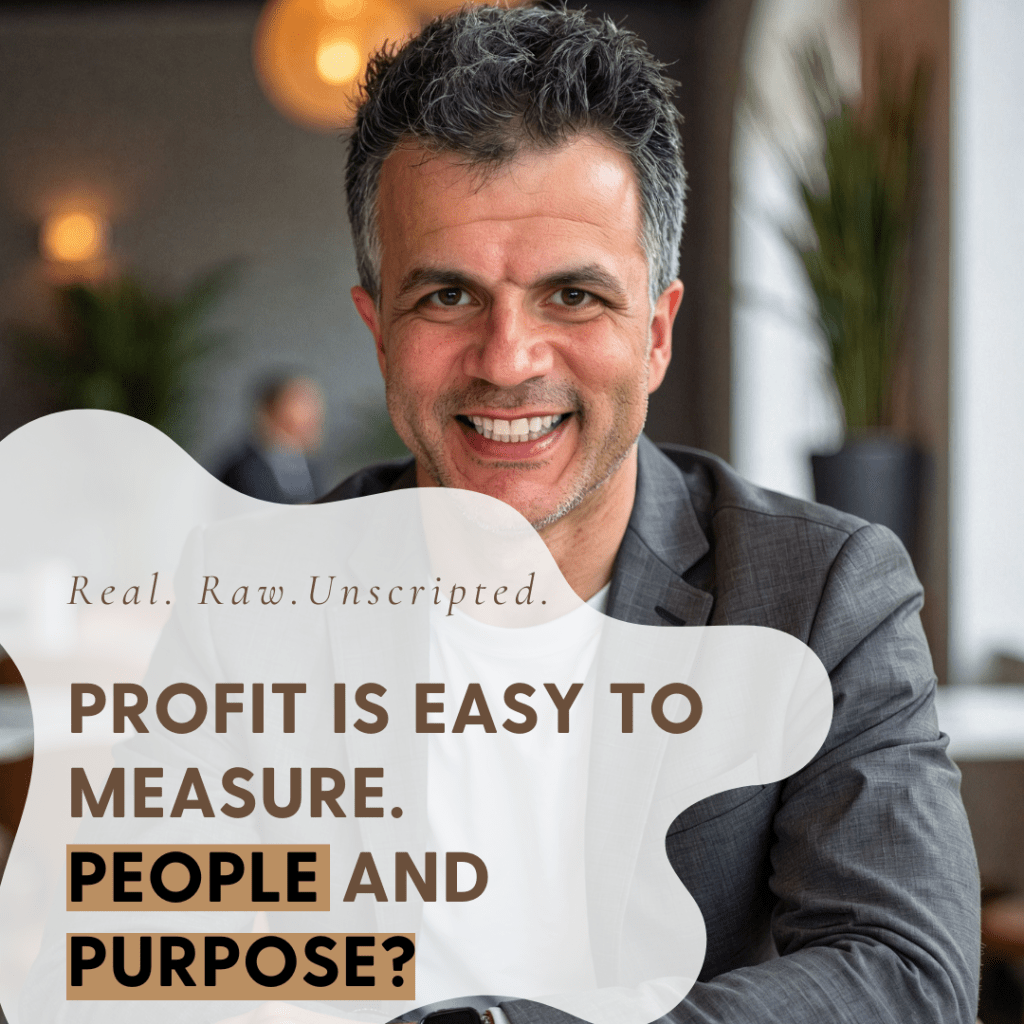
So my job—our job—is to find the balance that prioritizes all three: People, Profit, and Purpose.
Yes, all three.
How?
Let’s look.
As best I can see it, there’s a shift happening in leadership right now.
Quietly. Steadily. And in some corners—urgently.
We’re leaving behind the era of “scale at all costs.” We’re entering something far more human:
Transcendent leadership.
It’s not about being the hero. It’s not about quarterly domination. It’s about building something that lasts.
Not just financially—but culturally, ethically, and generationally.
Because today’s workforce? They don’t want to follow someone who just wins. They want to follow someone who matters.
What Is Transcendent Leadership?
Transcendent leadership is the practice of leading beyond self-interest.
It’s rooted in service, stewardship, and legacy. It focuses on three bottom lines:
- Profit (yes, this still matters)
- People (employees, customers, communities)
- Purpose (why it all exists in the first place)
A transcendent leader doesn’t just ask: “How do we outperform the market?” They ask: “Who do we become while doing it?”
And that shift changes everything.
The Principles of Transcendent Leadership
What separates transcendent leaders from transactional ones? It’s not style. It’s substance.
Here are the core principles:
1. Holistic Development
Transcendent leaders develop the whole person—not just the performer.
They invest in emotional intelligence, mental fitness, and long-term growth.
2. Ethical Decision-Making
When pressure hits, they don’t cut corners.
They choose what’s right—even when it’s not fast.
3. Distributed Power
They don’t hoard decision-making. They empower others to lead.
Because control is easy—but shared leadership scales.
4. Legacy Over Ego
It’s not about how they’re remembered.
It’s about what gets built after they’re gone.
5. Purpose-Driven Culture
They build environments where values aren’t just framed—they’re felt.
Because culture isn’t posters in the hallway. It’s decisions under pressure.
Why This Matters Now
We’re in a moment of leadership reckoning.
The stats are loud:
- 67% of employees are disengaged at work (Gallup, 2024)
- 1 in 3 workers would leave a job that lacks clear values (Deloitte)
- Companies with strong purpose alignment outperform peers by 42% in long-term returns (Harvard Business Review)
But more than numbers—there’s a deeper truth:
People are tired of following leaders who only measure profit. They want to build something that means something.
That’s why transcendent leadership is rising.
Because it’s not just about outcomes. It’s about how we get there.
What It Looks Like in Practice
■ A CEO who pauses a rollout until it’s fair for frontline workers.
■ A founder who ties quarterly bonuses to community impact—not just revenue.
■ A team leader who encourages sabbaticals, not just PTO policies.
■ An executive who opens their budget—and builds trust through transparency.
These aren’t feel-good moments.
They’re strategic. They drive loyalty, performance, and resilience.
5 Ways to Lead with Transcendence (Starting Now)
Want to build beyond your bottom line? Here’s where to begin:
1. Reconnect to your “why.”
Ask: Why does your work deserve to exist beyond profit?
2. Create metrics that measure meaning.
Track psychological safety, DEI growth, and team well-being—not just EBITDA.
3. Make space for reflection.
No reflection = no transcendence. Journal. Ask for feedback. Host quarterly “integrity checks.”
4. Build leadership at every level.
Train middle managers on human-first leadership. They shape the culture more than your C-suite ever will.
5. Normalize wholeness.
Recognize emotional labor. Model boundaries. Praise care as much as courage.
Final Word
You know I can’t stand writing just for the sake of writing.
But becoming a leader who truly balances profit, people, and purpose? That’s an art.
It takes guts. And the only way to lead with your gut—is to train it. That’s not fast. That’s not easy. But it’s worth it.
Transcendent leadership isn’t soft. It’s sustainable. It’s how high-performance teams survive the next wave of disruption.
Because companies that lead with purpose? They don’t just win. They endure.
And the leaders behind them? They’re not just remembered.
╰┈➤ They’re trusted.
╰┈➤ They’re followed.
╰┈➤ They’re missed.
That’s the goal.
Build something bigger than yourself.
See you at the top.
XO,
MV
Sources:
- Harvard Business Review, “The Business Case for Purpose”
- Deloitte Global Human Capital Trends Report, 2024
- Gallup State of the Global Workplace Report, 2024
- MIT Sloan Management Review, “Purpose in the C-Suite”
- “Transcendent Leadership: Leading in a Complex World,” Oxford Leadership




Leave a Reply