Thank you for making this the fastest-growing newsletter on the internet. I mean that. I don’t take it lightly that you let me into your car, your phone, your desktop—and maybe, just maybe, into the part of your brain that still allows room for ancient myths and urgent questions.
A few nights ago, somewhere between 2AM and too-late-to-be-awake, a thought snapped me out of sleep like a shot of adrenaline:
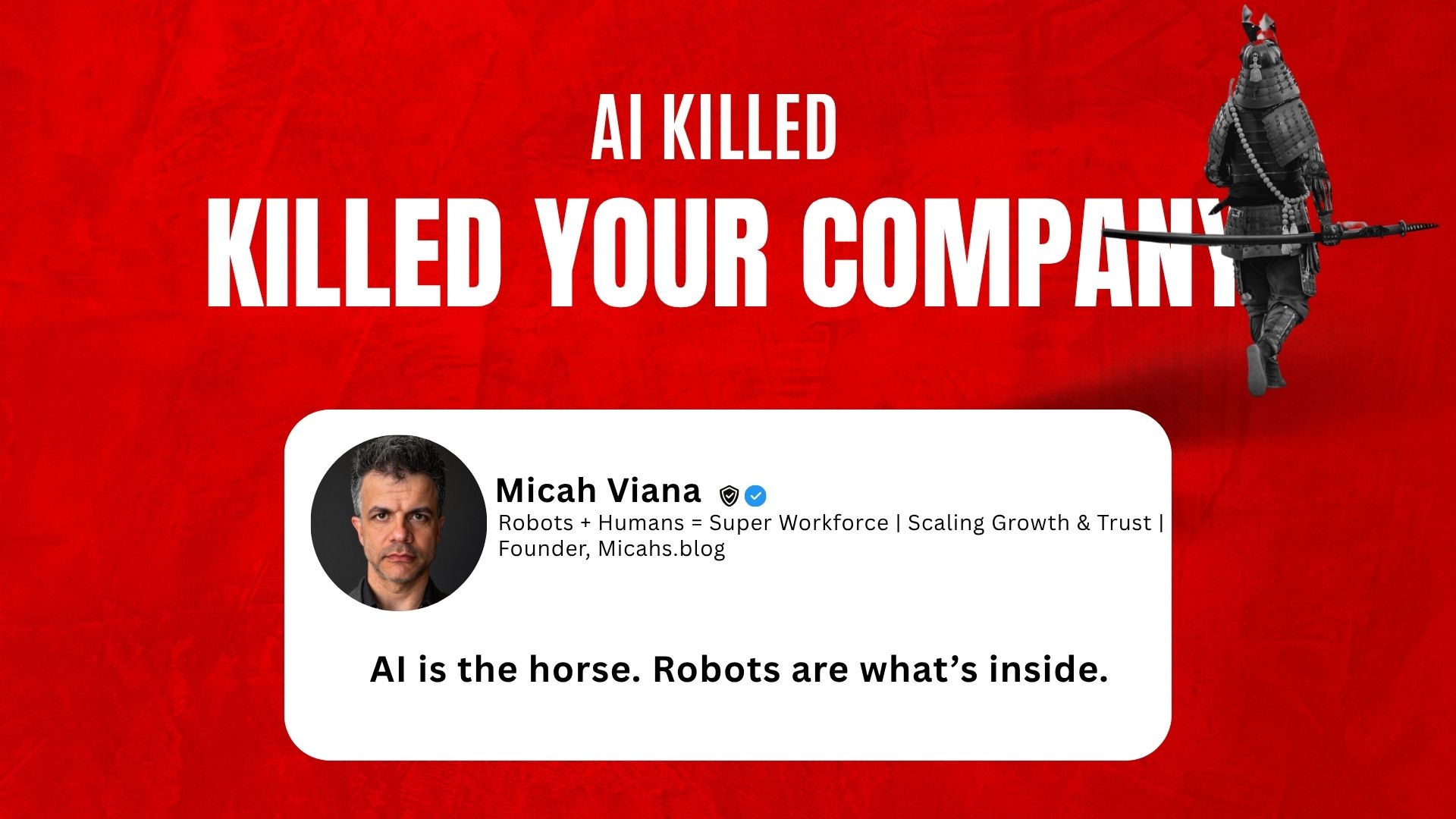
AI is the Trojan Horse.
Yes, it was strange.
Yes, it sounded like the opening line of a tech cult manifesto.
But once the haze wore off, the thought remained.
Because here we are, entering what many call the greatest technological era of our lifetime. And what’s the emotional response across boardrooms and break rooms?
Celebration.
Terror.
Confusion.
All at once.
I’m somewhere in the middle.
And if you’re honest—you probably are, too.
So let’s take a step back and revisit one of the greatest war stories ever told.
Troy wasn’t a blip.
It wasn’t a myth in passing.
It was the myth.
A ten-year siege.
A war waged for honor, love, and ego.
And behind it all, a story that feels uncomfortably close to what we’re living now.
Helen was taken. Achilles, the world’s most feared warrior, sat out—bitter and unwilling to fight. Until grief and rage pulled him back in.
He didn’t die in glory.
He died from a single, fatal vulnerability: an arrow to the heel.
The one place his armor couldn’t protect.
The Greeks didn’t win the war with muscle.
They won it with strategy.
They offered a gift.
A wooden horse.
An illusion of peace.
The Trojans opened their gates.
Welcomed it inside.
And that night, the city burned from within.
Dark? Yes. But where I want you to come with me is not into doom and gloom.
This isn’t a prophecy about the end of humankind.
This isn’t some apocalyptic “Robocop” scenario where the machines rise and civilization collapses.
Let’s stay far away from that cliché.
Before we dive into the studies, the strategy, and the solutions—let’s unpack the real fear.
The fear isn’t about annihilation.
It’s about absorption.
It’s about companies being consumed by a shift they didn’t see coming.
Some will figure it out.
Some will evolve and integrate.
But most are in danger of sleepwalking into a ten-year siege—only to lose the war anyway.
So no, this isn’t about killer robots.
This is about something far more real:
Leaders losing their grip on the very systems they were trusted to guide.
What you’re about to read next:
→ Three stories of AI gone wrong
→ Three research-backed trends about where AI and humanoids are heading
→ And three actionable steps to keep your company from mistaking the gift for the goal
Because not all gifts are for your well-being.
And not every peace offering is what it seems.
Three Stories of AI Gone Wrong
1. Copyright Chaos at Scale
Microsoft and OpenAI face lawsuits for training AI on tens of thousands of pirated books—some authors claim their voices were cloned without consent.
Lesson: What seems like efficiency can become liability fast.
2. Medical Missteps via Chatbot
MIT researchers found AI chatbots gave dangerously incorrect responses when patients used typos or casual language.
Lesson: Human lives are at stake when nuance is lost in automation.
3. The Hidden Employee Risk
A KPMG report revealed 57% of workers use AI at work without telling their employer—often uploading proprietary data into public tools.
Lesson: When employees don’t trust leadership with their AI use, the fallout is silent, systemic, and serious.
Three Research-Backed Trends About AI and Humanoids
1. Humanoids Are Already in the Field
Robotics firms like Agility and Figure are deploying humanoids in logistics, warehousing, and healthcare. This isn’t test lab theory. It’s happening now.
2. AI’s Pace Is Outrunning Corporate Readiness
McKinsey reports that while 79% of leaders say AI is a top priority, only 23% have a formal integration strategy. That gap is the battlefield.
3. The Culture Curve Lags Behind
Deloitte research shows most organizations over-invest in hardware and software—but underinvest in human trust, team redesign, and internal comms. And that’s where breakdown happens.
Three Actionable Steps You Can Take Now
1. Reframe the Language
A. Conduct a company-wide reset on how automation is talked about
→ Ban vague terms like “digital transformation” and “AI enhancement.”
→ Use precise, grounded language: “humanoid workforce integration,” “task-level automation,” “AI-driven role redesign.”
B. Train leadership to recognize the symbolic threat
→ AI is the horse, but the true disruptors—the humanoids—are already inside.
→ Use strategic sessions and myth-based framing (like the Trojan Horse) to surface hidden vulnerabilities.
→ Map exactly where robots may augment, replace, or co-work with current roles.
C. Align messaging across departments
→ HR, Ops, IT, and Communications should refer to this shift using the same language—with realism, not hype.
→ Inconsistent messaging creates fear. Unified language builds trust.
2. Run a Human-Centered Readiness Assessment
A. Assess workforce exposure and vulnerability
→ Map job functions by automation risk level.
→ Don’t just evaluate infrastructure—evaluate people.
→ Include frontline feedback: Where are your employees anxious? What roles feel threatened?
B. Incorporate leadership and culture into your readiness scoring
→ Is your leadership trusted?
→ Can your culture handle ambiguity, or does it fracture under change?
→ Most companies only test their tech—test your trust, too.
C. Pressure-test internal scenarios before deployment
→ Run tabletop simulations.
→ Role-play robotic rollout announcements.
→ Prepare managers with real-time scripts and escalation paths.
→ Treat this like fire-drill readiness, not theory.
3. Build Your Change Strategy Before Deployment
A. Create a pre-deployment playbook
→ Don’t wait for humanoids to arrive before acting.
→ Design your communication cadence, onboarding rituals, job walkthroughs, and escalation plans in advance.
→ Set expectations early—because silence breeds speculation.
B. Build a 3-tier change team
→ Executive sponsors: C-suite alignment and resources
→ Operational architects: Define process and org chart changes
→ Culture translators: People who bridge the emotional gap between leadership and labor
C. Start upskilling now—not after disruption hits
→ Identify tasks shifting to humanoids and redirect talent into new adjacent roles.
→ Build learning pathways tied to future state needs—not legacy structures.
→ Use micro-certifications, shadowing, and internal apprenticeships to move fast and build trust.
Final Word
You alone are the main character in this story.
And it’s your job—and mine—not to falter at the altar.
We are living through the greatest awakening of our lifetime—and possibly the most critical moment in the history of work.
You, me, and our companies?
We are in danger.
Danger of focusing on the wrong things.
At the wrong time.
For the wrong reasons.
And by the time you realize what happened, it may be too late.
That small startup—the one that wasn’t even on your radar as a competitor?
They will have outrun you.
Outpaced you.
Outmaneuvered you.
Not with budget.
Not with brand.
But by building super teams through a combination of AI, automation, and yes—robots.
That is the horse in your courtyard.
Your job is to make sure you’re not staring at the gift, mesmerized—while what’s inside is already rewriting your fate.
Focus on the right thing.
Build the right strategy.
Miss it—and you won’t just be telling the story.
You’ll become it.
See you at the top!
MV





Leave a Reply