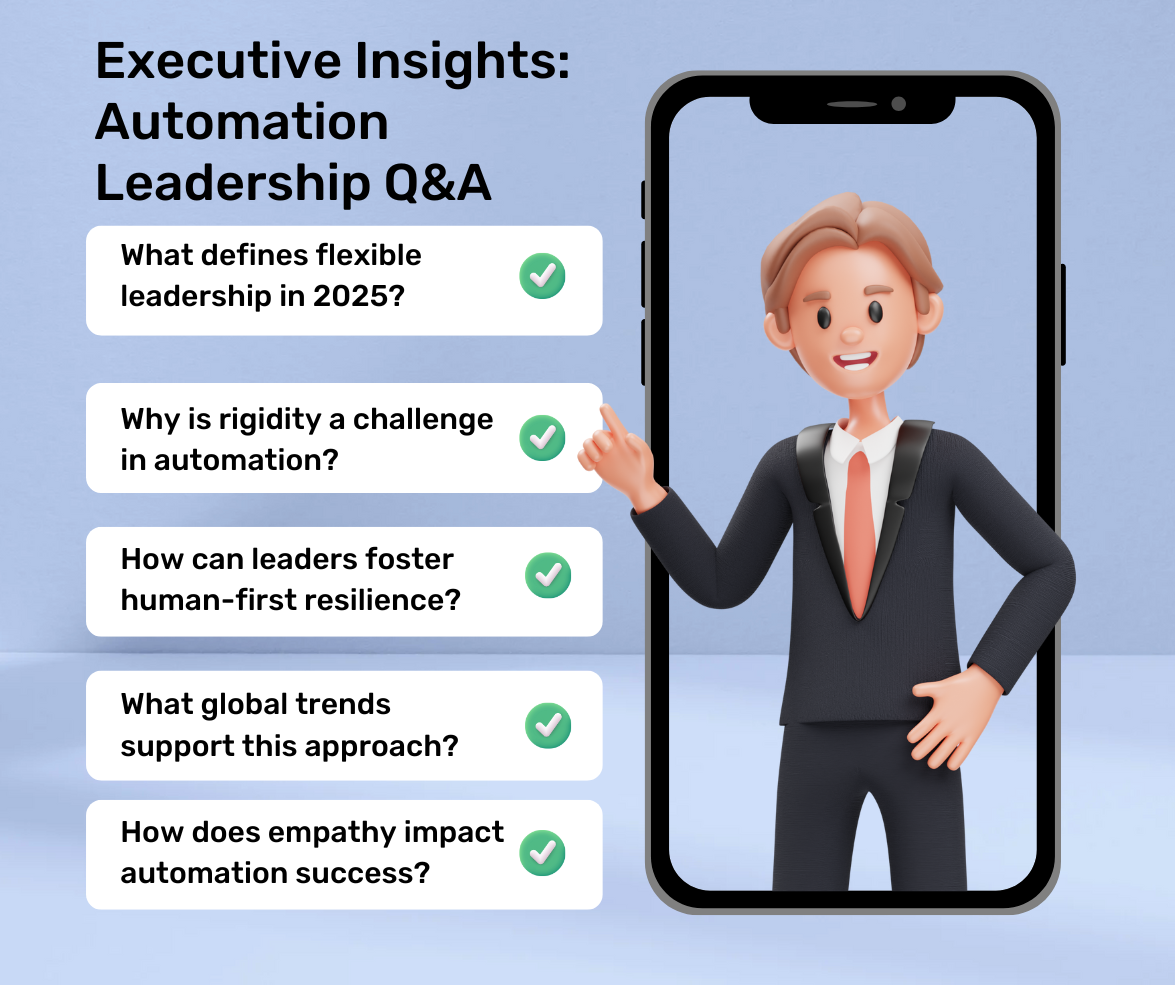
Redefining Leadership in Automation 2025: Embracing Flexibility for a Resilient Future
As of Monday, August 25, 2025, leaders face a practical choice: double-down on rigid targets or adopt directional goals that respect human dynamics. This is a human story about trust, learning speed, and resilience when AI and humanoids hit the floor.
By Micah Viana • August 25, 2025 • 06:38 PM EDT
The Global Awakening: Automation’s Dual Edge
Automation is rewriting how value is created. In some regions, robots already support assembly and intralogistics; elsewhere, talent gaps and change fatigue slow adoption. The dual edge—opportunity and disruption—demands a different playbook. Rigid goal systems tighten pressure; adaptive systems absorb it and convert uncertainty into momentum.
Directional goals with cadence reviews reduce friction and increase adoption—especially when paired with transparent communication, role-based upskilling, and leadership that narrates the “why,” not just the “what.”
Forging Resilience: The Power of Flexible Leadership
Flexible leadership isn’t loose—it’s precise about outcomes and generous about paths. Translate strategy into 90-day horizons, let teams adjust course weekly, and hold leaders accountable for learning velocity. In biomedical ops, shifting to adaptive milestones during supply shocks delivered efficiency gains without burning people out.
Playbook → ■ Set directional goals ■ Pair KPIs with sentiment ■ Create red-team forums ■ Reward small experiments ■ Protect deep-work time.
Radar: Leadership Impact Across Outcomes
A radar graphic comparing flexible vs. rigid leadership on stress, turnover, engagement, and innovation.
A Call to Reflective Action
Automation’s tide won’t wait—but direction is a leadership choice. Audit your operating rhythm this week: where are goals absolute that should be directional? Where is sentiment invisible? Where can a 2-week experiment replace a 6-month plan?
8,477 People Read our Articles Today—Don’t Be Left Behind, Join the Bold!





Leave a Reply