Robot Leasing • Multi-Level Towers • Vertical Movement • 2026
Robot Leasing for Multi-Level Pick Towers and Vertical Movement Paths in 2026
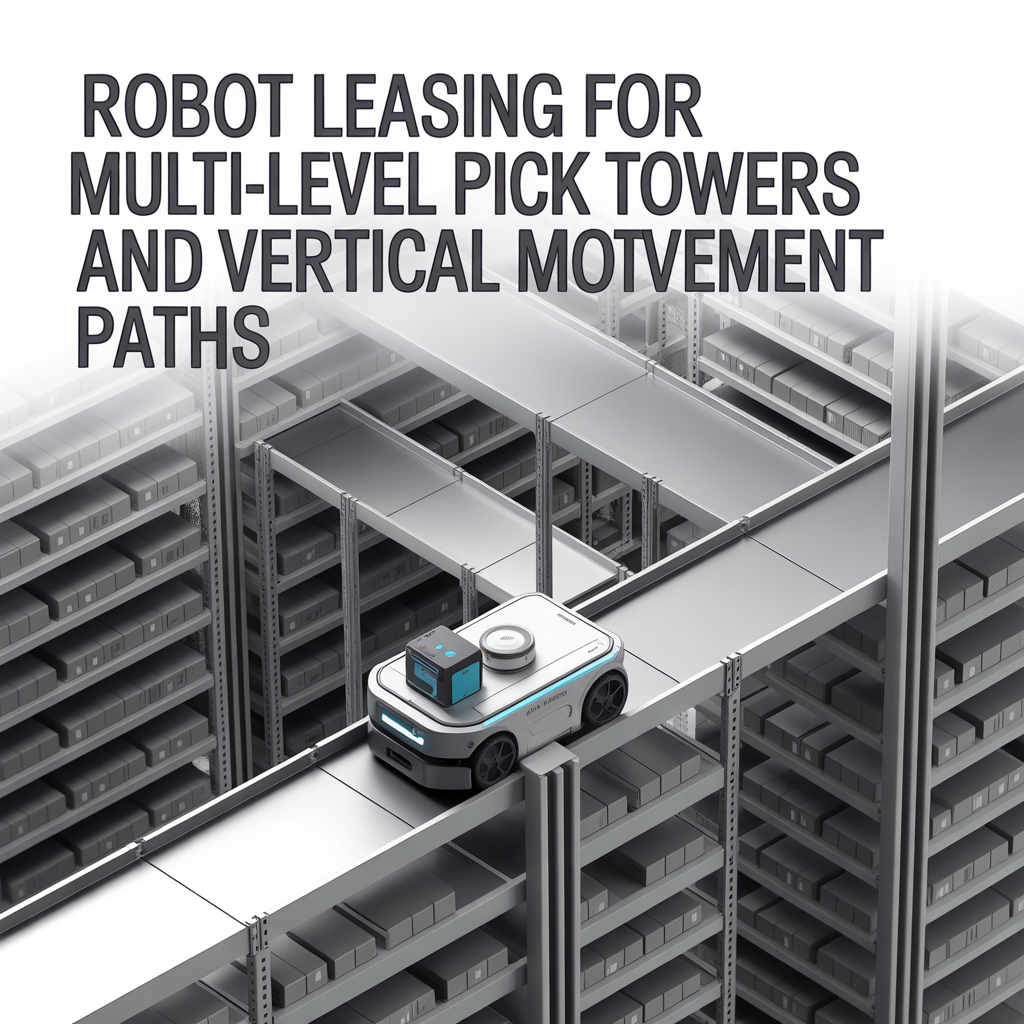
Pick towers are vertical by design.
Tight platforms, ramps, sightline limits, and multi-tier movement create challenges robots never face on a flat warehouse floor.
Vertical environments reshape robot leasing because they mix elevation, slope, congestion, and precision into every mission.
The Hidden Risks of Multi-Level Vertical Robotics
- ■ ramp gradients increasing motor load and battery consumption
- ■ narrow platforms limiting passing and maneuvering space
- ■ frequent elevation changes affecting localization accuracy
- ■ higher consequences for navigation errors near edges and rails
- ■ tier-to-tier travel slowing mission throughput
A vertical system punishes bad engineering more than any horizontal layout ever will.
Four Cost Multipliers in Multi-Level Towers
1. Ramp Load Stress
Motors, wheels, and brakes work harder on incline and decline cycles.
2. Vertical Travel Time
Each tier change adds seconds that accumulate into real throughput loss.
3. Narrow Platforms
Limited passing zones increase congestion and SLA events.
4. Safety Tolerance
Small navigation errors near edges have bigger consequences.
Executive Questions That Predict Success
- ■ What is the gradient and length of every ramp?
- ■ How wide are platforms at their narrowest point?
- ■ Are robots allowed near edges or rails?
- ■ How many missions require tier changes per hour?
- ■ Are pick zones congested or free-flowing?
- ■ Can human pickers and robots safely coexist in elevated lanes?
Vertical robotics is a leadership decision, not just an engineering one.
Contract Clauses Required in Multi-Level Deployments
- ■ SLA rules tied to tier-change travel time
- ■ motor and brake maintenance coverage for ramp stress
- ■ safety protocols for elevated lanes
- ■ map updates as tower layout evolves
- ■ exception handling for congestion on narrow platforms
- ■ uptime tracked separately for vertical vs horizontal missions
- ■ performance guarantees for incline/decline navigation
Vertical environments require leases written specifically for elevation, not generic warehouse space.
Lease vs Buy for Pick Towers and Vertical Paths
Leasing Wins When
- ■ tower configuration may change
- ■ SKU velocity shifts floor by floor
- ■ vertical loads vary by season
- ■ engineering support is needed for safe elevation travel
Buying Wins When
- ■ tower design is stable and mature
- ■ vertical flows follow predictable patterns
- ■ platform geometry will not change
- ■ internal teams handle tuning and optimization
Ownership only works when vertical behavior is stable and understood.
Vertical Readiness Score
Low Readiness (0–59)
- ■ unclear ramp specs
- ■ no safety rails or barriers
- ■ inconsistent lane widths
Medium Readiness (60–79)
- ■ some platform consistency
- ■ defined but variable traffic patterns
- ■ moderate congestion on ramps
High Readiness (80–100)
- ■ engineered slopes and widths
- ■ predictable multi-level flow
- ■ strong alignment between human and robot paths
Your 1–2–3 Path for Vertical Robotics Planning
-
1 — Robot Integration Readiness Score
Measure your vertical stability, flow, and safety posture.
→ Take the Readiness Score -
2 — Robot ROI Calculator
Model vertical travel time, ramp load, and mission throughput.
→ Run the ROI Calculator -
3 — Lease vs Buy Robots Calculator
Compare leasing and owning when elevation drives performance and cost.
→ Use the Lease vs Buy Calculator
Vertical environments reveal stress patterns that flat-floor deployments never show. Leaders who engineer leases around elevation protect safety, performance, and throughput in 2026.
Leasing de Robôs • Pick Towers • Movimentação Vertical • 2026
Leasing de Robôs em Pick Towers Multinível e Rotas Verticais em 2026
Pick towers são estruturas verticais por natureza.
Plataformas estreitas, rampas íngremes e mudanças constantes de nível criam desafios que o robô não encontra em um piso plano.
Ambientes verticais mudam o leasing porque combinam inclinação, elevação, fluxo e precisão em cada missão.
Riscos reais em operações multinível
- ■ rampas exigindo mais força dos motores e maior consumo de bateria
- ■ plataformas estreitas limitando ultrapassagem
- ■ mudanças de nível afetando a precisão da navegação
- ■ maiores riscos perto de bordas e guarda-corpos
- ■ missões mais lentas devido ao deslocamento entre níveis
Ambiente vertical não perdoa erro de engenharia.
Quatro multiplicadores de custo em pick towers
1. Esforço em rampas
Motores e rodas trabalham no limite em inclinações frequentes.
2. Tempo de deslocamento vertical
Cada mudança de nível adiciona segundos que reduzem throughput.
3. Plataformas estreitas
Menos espaço significa mais congestionamento.
4. Tolerância de segurança
Pequenos erros têm impacto maior em áreas elevadas.
Perguntas que a liderança deve responder
- ■ Qual é a inclinação e o comprimento de cada rampa?
- ■ Qual é o ponto mais estreito da plataforma?
- ■ O robô pode operar próximo às bordas?
- ■ Quantas missões exigem mudança de nível por hora?
- ■ Como é o trânsito humano nas áreas elevadas?
- ■ O fluxo vertical é constante ou imprevisível?
Robótica vertical é decisão estratégica — não só técnica.
Cláusulas contratuais essenciais
- ■ SLAs baseados no tempo de mudança entre níveis
- ■ manutenção reforçada de motores e freios por uso em rampas
- ■ regras de segurança em plataformas elevadas
- ■ atualizações de mapa conforme a torre muda
- ■ exceções por congestionamento em áreas estreitas
- ■ separação de uptime por missão vertical e horizontal
- ■ garantias de performance em inclinação
Contrato para área plana não serve para torre vertical.
Leasing ou compra?
Quando leasing faz mais sentido
- ■ torre ainda evoluindo
- ■ mix de SKU variando por nível
- ■ sazonalidade afetando carga vertical
- ■ necessidade de suporte técnico contínuo
Quando comprar pode ser melhor
- ■ torre madura e estável
- ■ fluxo vertical previsível
- ■ medidas e geometrias consolidadas
- ■ time interno cuidando da otimização
Comprar só funciona quando o comportamento vertical já é previsível.
Readiness para ambientes verticais
Readiness Baixo
- ■ rampas sem especificação clara
- ■ ausência de guarda-corpos ou proteção adequada
- ■ plataformas com largura inconsistente
Readiness Médio
- ■ alguma padronização nas plataformas
- ■ fluxo variável entre níveis
- ■ congestionamento moderado em rampas
Readiness Alto
- ■ rampas e plataformas projetadas
- ■ fluxo previsível e estável
- ■ integração clara entre humanos e robôs
Seu caminho 1–2–3 para robôs em pick towers
-
1 — Robot Integration Readiness Score
Avalie sua estrutura vertical, segurança e fluxo real.
→ Calcular Readiness -
2 — ROI Calculator
Modele tempo de deslocamento vertical, carga em rampa e throughput real.
→ Rodar ROI -
3 — Lease vs Buy Robots Calculator
Compare leasing e compra quando elevação impacta custo e performance.
→ Comparar
Ambientes verticais revelam cargas, variações e riscos que operações horizontais nunca mostram. Líderes que estruturam o leasing com base na elevação protegem fluxo, segurança e performance em 2026.



Leave a Reply